Safe and habitable homes

Share Safe and habitable homes on Facebook Share Safe and habitable homes on X (formerly Twitter) Share Safe and habitable homes on Linkedin Email Safe and habitable homes link

The Safe & Habitable Homes Peer Forum

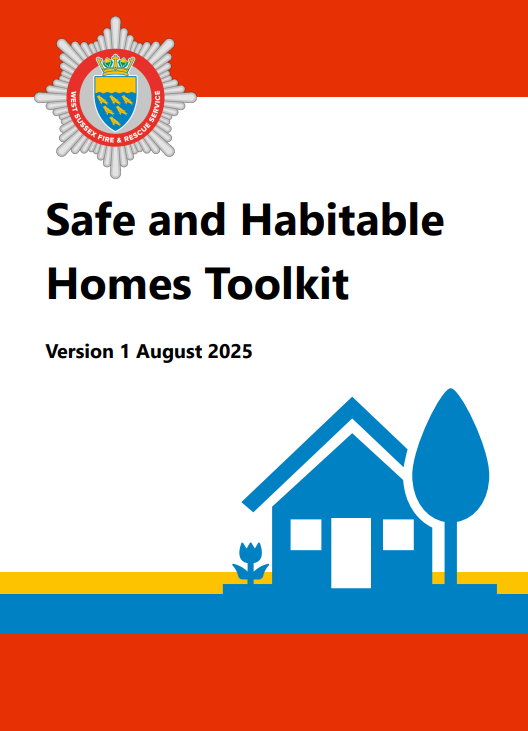
Image front page of safe and habitable homes toolkit guidanceA Community Initiative Partnership to address self-neglect in related to health, safety, and housing standards. The Forum is made up of customer-facing practitioners from housing, health, social care, mental health, community safety, care providers, and support services: to share good practice to sustain people with self-neglect concerns in suitable and safer homes for the benefit of their health and wellbeing in order for them to remain in the community. The collaborative aim is to avoid residential care, hospital admission and loss of life. The Forum focuses particularly on hoarding or filthy and verminous conditions, and recognises that cases may be further complicated by eviction, cuckooing, substance misuse, domestic abuse, disrepair, and for some people who have been re-housed when previously homeless.

The Forum of a multi-agency of partners, provides practical advice, guidance, and innovative solutions to practitioners. This is based on a strength-based and person-centred approach. Where appropriate, bespoke packages for people that could not be achieved with a ‘usual-care’ approach may be explored. Hoarding and/or Diogenes is complex and can be related to many other concerns that impact managing a safe and suitable home.

The Forum promotes a step-by-step approach though Safe & Habitable Homes Toolkit (opens in a new window) to support partners to be consistent in practice.

Safe and Habitable Homes references the guidance provided under Safeguarding Adults Board - practice, procedures, and protocols (opens in a new window)

A Case Management Enquiry can be presented at the Forum for any person living in West Sussex who is over 18 years old and there is a professional concern of self-neglect related to suitable, safe, and habitable housing. All cases presented at the Forum will be anonymised and confidential. As a Peer Forum, membership to the meeting is open to West Sussex professional practitioners.

Email for invitation to Safe & Habitable Homes Peer Forum housing4health@westsussex.gov.uk


Safeguarding and the Self-Neglect Multi-Agency Approach

Given the emotive nature of self-neglect and the associated risks, it is natural that professionals want to raise their concerns via safeguarding.

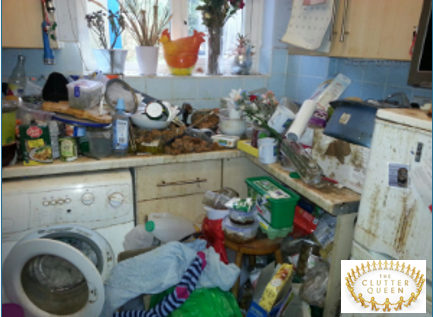
However, in all but rare cases, safeguarding isn’t the most appropriate way of providing support, and may well delay someone receiving theKitchen image illustrating hoarding and diogenes combined concerns right support. This may be because the person does not meet the thresholds for a safeguarding enquiry, that is as they do not have care and support needs, and they understand the risk they are posing to themselves and can manage this situation.
It is recognised that self-neglect related to housing concerns is a complex situation and that a variety of agencies will come into contact with the same person. Hoarding is now also, recognised as a mental health diagnosis (DSM V). Not all those who hoard will meet criteria for support from statutory services such as Mental Health.

Research and experience shows that the best outcome for those who self-neglect, is for all agencies to work with the person at their pace, using different methods of encouragement, whilst remaining non-judgemental and exploring different options for support. The Peer Forum and the Toolkit are designed to support the team-around -the-person approach, for the multi-agency practitioners to create a joint-action-pan.


Safe & Habitable Homes Toolkit STEP-BY-STEP: INDEX
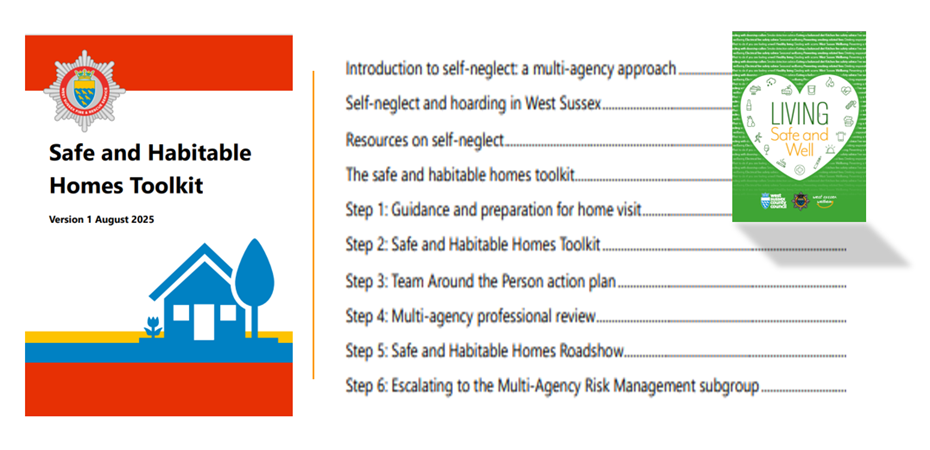
Toolkit cover and step-by-step index from inside booklet

Safe & Habitable Homes Toolkit Page 2 (opens in a new window)


Safe & Habitable Homes Toolkit STEP ONE: Preparation for the visit

Your first visit to the home is an opportunity to connect with the person. The person-centred approach with personal involvement in the process is key to long-term collaboration towards a resolution. You may need to come back on several occasions before you gain access to the home, and indeed it may be some time until you may be invited to access other parts of the property.

How to talk to someone with hoarding behaviours (opens in a new window)

Respectful language involves using non-judgmental terms like "hoarding behaviours" instead of "hoarder," avoiding words like "junk" or "rubbish," and focusing on "letting go" rather than "throwing away," to acknowledge the deep emotional connection people with hoarding disorder have with their possessions, as language can trigger shame and resistance, while supportive communication focuses on the person's safety and needs.


[Edited from original source: Cristina M. Sorrentino, PhD, LCSW, Boston University School of Social Work]


Safe & Habitable Homes Toolkit STEP TWO: Home Audit Assessment ToolsImage of table from the Toolkit showing 7 essential facilties in the home
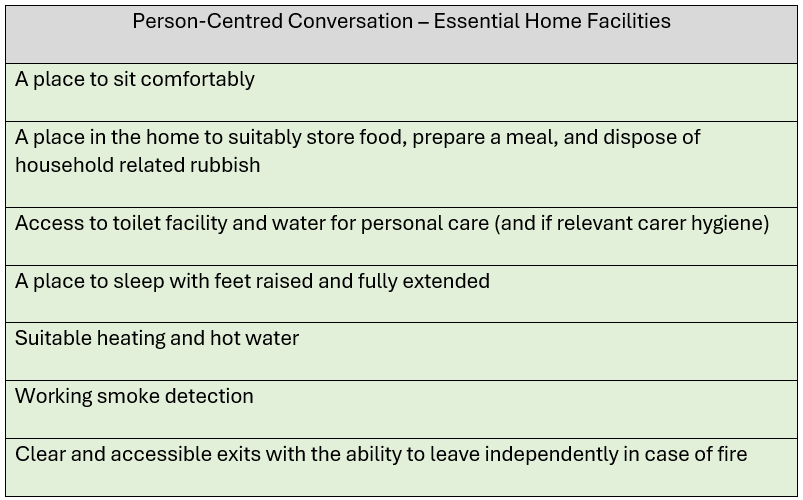
The resources for reference and guidance to complete the Home Audit Assessment with the person and to record their thoughts and wishes, are presented in the Safe & Habitable Homes Toolkit and aligned together through RAG (Red/Amber/Green) RATING.
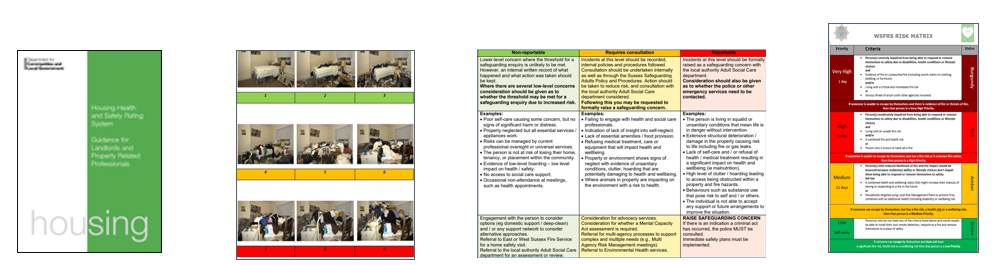
Images of range of resources provided in the toolkit

Housing Health & Safety Rating System - Clutter Rating - Safeguarding Thresholds - Fire Risk Matrix


Safe & Habitable Homes Toolkit STEP THREE: Team Around the Person & Action Plan

Using the Peer Forum & CLIO3 (community local information) database to bring together practitioners and services to create a person-centred team-around-the-person TAP. Using the Joint-Action-Plan Framework available in the Toolkit to identify needs and assign actions to the subject experts to collaborate and share resources, support hours, and funding opportunities.


Safe & Habitable Homes Toolkit STEP FOUR: Multi-Agency Partnership Review

A team-around-the-person approach to monitor and collaborate on the Joint-Action-Plan developed by the TAP Team. Meeting periodically at least every 4-6 weeks to record and re-evaluate progress for the person.


Safe & Habitable Homes Toolkit STEP FIVE: S&HH Membership and Forum Resources
Safe and habitable homes logo of a house with a heart for person-centred approach and 3 people icons to show collaborative work with the person.A monthly on-line peer meeting opportunity to explore learning, education, and case study support.

AGENDA

WELCOME & INTRODUCTIONS

CASE DISCUSSIONS

GOOD PRACTICE

S&HH PEER FORUM UPDATES

ROUND ROBIN - SERVICE NEWS


Please direct any Safe & Habitable Homes Peer Forum case management enquires to housing4health@westsussex.gov.uk


Safe & Habitable Homes Toolkit STEP SIX: MARM and Complex Case Risk Management
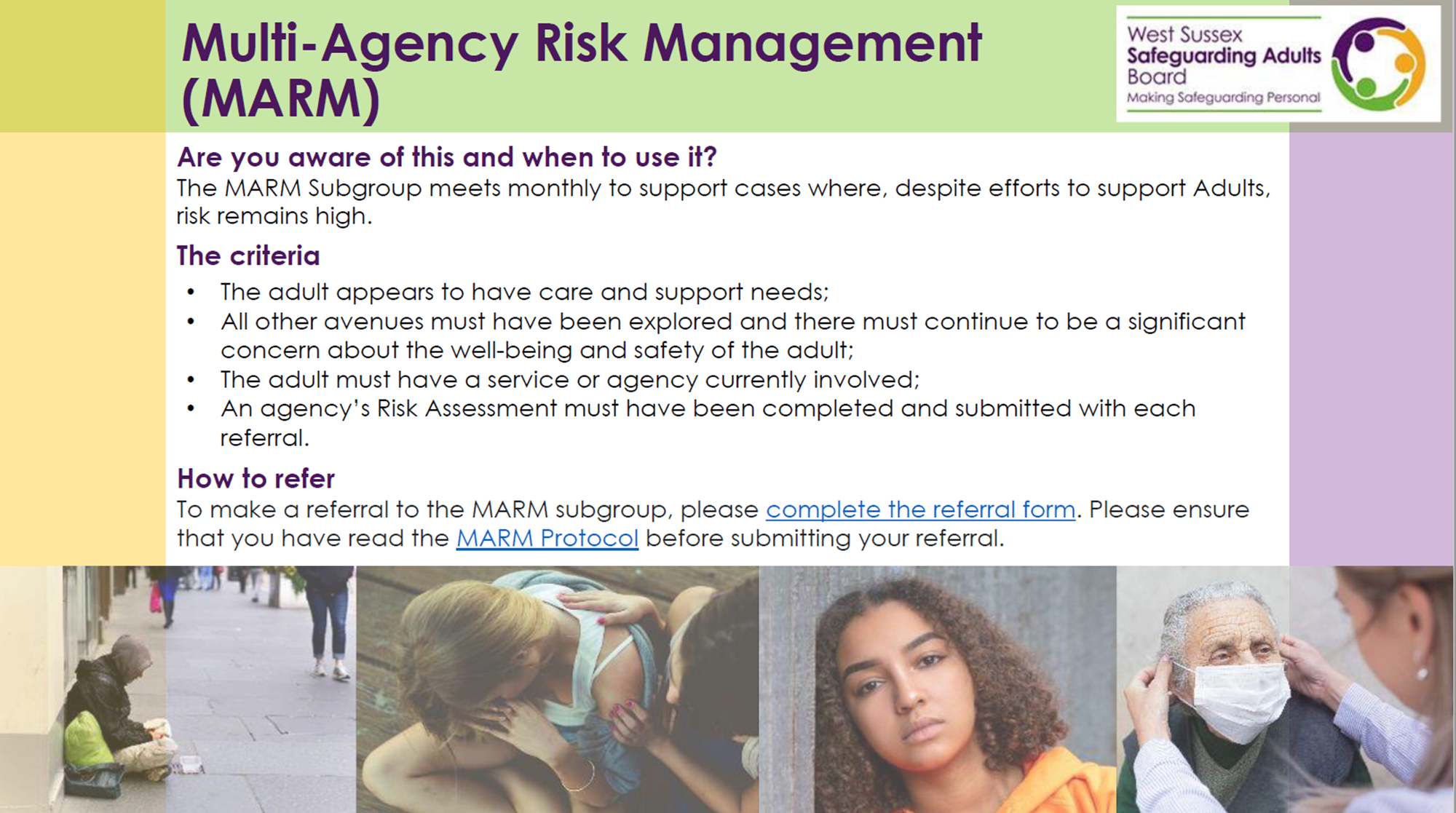
Image of MARM multi-agency risk management forum

MARM Application Flyer (opens in new tab)


Accessibility and alternate formats

If you require any of this information in an alternative format, then please contact us via email at WestSussexLNRS@westsussex.gov.uk(External link) or by telephone on 01243 642105 and we will do our best to assist you. If you are deaf or hard of hearing and have a BT Relay UK app (opens in new window) installed on your PC, laptop or smartphone, you can contact us on 18001 01243 642105.

For more information about the accessibility of this website, please see our Accessibility tab (opens in new window) at the foot of the page.

Please note, you can use the Google Translate function to access this project in a range of different languages. The Google Translate widget can be found at the top left-hand side of the project page, where it sits just above the black West Sussex County Council ribbon.

The Safe & Habitable Homes Peer Forum

Image front page of safe and habitable homes toolkit guidanceA Community Initiative Partnership to address self-neglect in related to health, safety, and housing standards. The Forum is made up of customer-facing practitioners from housing, health, social care, mental health, community safety, care providers, and support services: to share good practice to sustain people with self-neglect concerns in suitable and safer homes for the benefit of their health and wellbeing in order for them to remain in the community. The collaborative aim is to avoid residential care, hospital admission and loss of life. The Forum focuses particularly on hoarding or filthy and verminous conditions, and recognises that cases may be further complicated by eviction, cuckooing, substance misuse, domestic abuse, disrepair, and for some people who have been re-housed when previously homeless.

The Forum of a multi-agency of partners, provides practical advice, guidance, and innovative solutions to practitioners. This is based on a strength-based and person-centred approach. Where appropriate, bespoke packages for people that could not be achieved with a ‘usual-care’ approach may be explored. Hoarding and/or Diogenes is complex and can be related to many other concerns that impact managing a safe and suitable home.

The Forum promotes a step-by-step approach though Safe & Habitable Homes Toolkit (opens in a new window) to support partners to be consistent in practice.

Safe and Habitable Homes references the guidance provided under Safeguarding Adults Board - practice, procedures, and protocols (opens in a new window)

A Case Management Enquiry can be presented at the Forum for any person living in West Sussex who is over 18 years old and there is a professional concern of self-neglect related to suitable, safe, and habitable housing. All cases presented at the Forum will be anonymised and confidential. As a Peer Forum, membership to the meeting is open to West Sussex professional practitioners.

Email for invitation to Safe & Habitable Homes Peer Forum housing4health@westsussex.gov.uk


Safeguarding and the Self-Neglect Multi-Agency Approach

Given the emotive nature of self-neglect and the associated risks, it is natural that professionals want to raise their concerns via safeguarding.

However, in all but rare cases, safeguarding isn’t the most appropriate way of providing support, and may well delay someone receiving theKitchen image illustrating hoarding and diogenes combined concerns right support. This may be because the person does not meet the thresholds for a safeguarding enquiry, that is as they do not have care and support needs, and they understand the risk they are posing to themselves and can manage this situation.

It is recognised that self-neglect related to housing concerns is a complex situation and that a variety of agencies will come into contact with the same person. Hoarding is now also, recognised as a mental health diagnosis (DSM V). Not all those who hoard will meet criteria for support from statutory services such as Mental Health.

Research and experience shows that the best outcome for those who self-neglect, is for all agencies to work with the person at their pace, using different methods of encouragement, whilst remaining non-judgemental and exploring different options for support. The Peer Forum and the Toolkit are designed to support the team-around -the-person approach, for the multi-agency practitioners to create a joint-action-pan.


Safe & Habitable Homes Toolkit STEP-BY-STEP: INDEX

Toolkit cover and step-by-step index from inside booklet

Safe & Habitable Homes Toolkit Page 2 (opens in a new window)


Safe & Habitable Homes Toolkit STEP ONE: Preparation for the visit

Your first visit to the home is an opportunity to connect with the person. The person-centred approach with personal involvement in the process is key to long-term collaboration towards a resolution. You may need to come back on several occasions before you gain access to the home, and indeed it may be some time until you may be invited to access other parts of the property.

How to talk to someone with hoarding behaviours (opens in a new window)

Respectful language involves using non-judgmental terms like "hoarding behaviours" instead of "hoarder," avoiding words like "junk" or "rubbish," and focusing on "letting go" rather than "throwing away," to acknowledge the deep emotional connection people with hoarding disorder have with their possessions, as language can trigger shame and resistance, while supportive communication focuses on the person's safety and needs.


[Edited from original source: Cristina M. Sorrentino, PhD, LCSW, Boston University School of Social Work]


Safe & Habitable Homes Toolkit STEP TWO: Home Audit Assessment ToolsImage of table from the Toolkit showing 7 essential facilties in the home

The resources for reference and guidance to complete the Home Audit Assessment with the person and to record their thoughts and wishes, are presented in the Safe & Habitable Homes Toolkit and aligned together through RAG (Red/Amber/Green) RATING.

Images of range of resources provided in the toolkit

Housing Health & Safety Rating System - Clutter Rating - Safeguarding Thresholds - Fire Risk Matrix


Safe & Habitable Homes Toolkit STEP THREE: Team Around the Person & Action Plan

Using the Peer Forum & CLIO3 (community local information) database to bring together practitioners and services to create a person-centred team-around-the-person TAP. Using the Joint-Action-Plan Framework available in the Toolkit to identify needs and assign actions to the subject experts to collaborate and share resources, support hours, and funding opportunities.


Safe & Habitable Homes Toolkit STEP FOUR: Multi-Agency Partnership Review

A team-around-the-person approach to monitor and collaborate on the Joint-Action-Plan developed by the TAP Team. Meeting periodically at least every 4-6 weeks to record and re-evaluate progress for the person.


Safe & Habitable Homes Toolkit STEP FIVE: S&HH Membership and Forum Resources

Safe and habitable homes logo of a house with a heart for person-centred approach and 3 people icons to show collaborative work with the person.A monthly on-line peer meeting opportunity to explore learning, education, and case study support.

AGENDA

WELCOME & INTRODUCTIONS

CASE DISCUSSIONS

GOOD PRACTICE

S&HH PEER FORUM UPDATES

ROUND ROBIN - SERVICE NEWS


Please direct any Safe & Habitable Homes Peer Forum case management enquires to housing4health@westsussex.gov.uk


Safe & Habitable Homes Toolkit STEP SIX: MARM and Complex Case Risk Management

Image of MARM multi-agency risk management forum

MARM Application Flyer (opens in new tab)


Accessibility and alternate formats

If you require any of this information in an alternative format, then please contact us via email at WestSussexLNRS@westsussex.gov.uk(External link) or by telephone on 01243 642105 and we will do our best to assist you. If you are deaf or hard of hearing and have a BT Relay UK app (opens in new window) installed on your PC, laptop or smartphone, you can contact us on 18001 01243 642105.

For more information about the accessibility of this website, please see our Accessibility tab (opens in new window) at the foot of the page.

Please note, you can use the Google Translate function to access this project in a range of different languages. The Google Translate widget can be found at the top left-hand side of the project page, where it sits just above the black West Sussex County Council ribbon.

Peer Forum Case Study & Professional Reflection

Considering the practical challenges faced by professionals working with people affected by hoarding.

Points raised by members of the Peer Forum included:

  • Managing expectations of neighbours and family members who may not understand why immediate intervention is not always appropriate.
  • Explaining that sustainable change often requires time, trust-building and ongoing engagement.
  • Managing negative reactions from others who expect a rapid or enforcement-led response.
  • Addressing unconscious bias from other professionals when working with complex cases. 

Although progress can take a considerable amount of time, the work remains rewarding and provides opportunities to make meaningful long-term changes. 

Thank you for sharing your story with us.

You need to be signed in to share your story.

All fields marked with an asterisk (*) are required.

  • Share 23/09/26 Case Two: Cluttered Home Environment, Health Deterioration and Reduced Executive Function on Facebook Share 23/09/26 Case Two: Cluttered Home Environment, Health Deterioration and Reduced Executive Function on X (formerly Twitter) Share 23/09/26 Case Two: Cluttered Home Environment, Health Deterioration and Reduced Executive Function on Linkedin Email 23/09/26 Case Two: Cluttered Home Environment, Health Deterioration and Reduced Executive Function link

    23/09/26 Case Two: Cluttered Home Environment, Health Deterioration and Reduced Executive Function

    16 days ago

    Cluttered Home Environment, Health Deterioration and Reduced Executive Function

    Background

    A referral was received for a male adult living alone in a bedsit who was being assessed for eligibility for long-term telecare support. Previous involvement from Adult Social Care had taken place, including discussions regarding alternative accommodation and extra care housing; however, these options had previously been declined. At the time of assessment, no Adult Social Care team was actively involved.

    The practitioner identified significant concerns regarding the condition of the property, which appeared cluttered and presented risks to the individual's health and safety. The situation was further complicated by... Continue reading

    Cluttered Home Environment, Health Deterioration and Reduced Executive Function

    Background

    A referral was received for a male adult living alone in a bedsit who was being assessed for eligibility for long-term telecare support. Previous involvement from Adult Social Care had taken place, including discussions regarding alternative accommodation and extra care housing; however, these options had previously been declined. At the time of assessment, no Adult Social Care team was actively involved.

    The practitioner identified significant concerns regarding the condition of the property, which appeared cluttered and presented risks to the individual's health and safety. The situation was further complicated by the fact that the individual was due to commence cancer treatment within the following week. His primary focus was understandably his health and treatment, rather than the condition of his home environment.

    Presenting Issues

    1. Cluttered and Unsafe Living Environment

    The property was described as being in a poor condition, with concerns regarding safety within the home. Although the telecare assessment could support monitoring and safety, it would not mitigate the environmental risks associated with excessive clutter and poor living conditions.

    Potential risks included:

    • Restricted access and movement around the property.
    • Increased fire risk.
    • Infection control concerns.
    • Barriers to personal care and self-neglect.
    • Reduced ability to safely recover from medical treatment.

    2. Health Concerns and Competing Priorities

    The individual was preparing to begin cancer treatment and clearly identified his health as his immediate priority. The practitioner expressed concern regarding how willing or able he would be to engage in conversations about the home environment whilst coping with significant medical treatment.

    This highlights the challenge of balancing urgent environmental risks against an individual's current emotional and physical capacity to engage with intervention.

    3. Possible Executive Function Difficulties

    Although not formally diagnosed within the discussion, several indicators suggested potential executive functioning difficulties:

    • Historical reluctance to engage with support services.
    • Difficulty maintaining safe living conditions.
    • Challenges organising and managing household tasks.
    • Apparent inability to prioritise environmental risks despite their significance.
    • Potential overwhelm when faced with the scale of change required.

    Individuals experiencing executive dysfunction often know what changes are needed but struggle to initiate, organise, sequence, and sustain the tasks required to achieve improvement.

    4. Risk of Self-Neglect

    The combination of deteriorating home conditions, impending medical treatment and limited engagement may indicate elements of self-neglect.

    Indicators include:

    • Living in hazardous conditions.
    • Reduced capacity to maintain essential living spaces.
    • Prioritising immediate health concerns over environmental safety.
    • Potential barriers to accepting support.

    Use of the PAN Sussex self-neglect framework may be useful in understanding the underlying causes and developing a proportionate, person-centred response.

    Strengths and Protective Factors

    Despite the concerns identified, the case demonstrated several strengths:

    • The individual was engaging with professionals and allowing home visits.
    • He was able to articulate his priorities and concerns.
    • Telecare services were being explored.
    • Professionals were planning joint working with the Fire Service.
    • Previous assessments and social care information were available.
    • The individual retained choice and autonomy regarding support options.

    Professional Reflection

    This case demonstrates the importance of understanding clutter and self-neglect through a person-centred and trauma-informed lens.

    The immediate temptation may be to focus on the volume of clutter within the property. However, the discussion highlighted the importance of shifting attention to what matters most to the individual and identifying essential safety outcomes rather than pursuing wholesale environmental change.

    Professionals reflected on the need to focus initially on:

    • A safe place to sleep.
    • Access to washing facilities.
    • Access to a toilet.
    • Safe food preparation areas.
    • Infection control measures.
    • Clear access and escape routes.
    • Early warning systems through TeleCare with potential for integrated smoke alarms.

    Where executive functioning difficulties are present, expecting an individual to undertake a full decluttering programme during cancer treatment is unlikely to be realistic. Instead, support should focus on manageable and achievable goals that reduce immediate risk whilst respecting the person's autonomy.

    The case also reinforces the importance of recognising that clutter is often a symptom rather than the primary problem. Underlying factors may include:

    • Physical illness.
    • Cognitive decline.
    • Depression.
    • Anxiety.
    • Social isolation.
    • Executive dysfunction.
    • Trauma.
    • Bereavement.

    Effective intervention requires curiosity about the causes rather than focusing solely on the environment itself.

    Recommended Interventions

    Immediate Actions

    Safe and Well Assessment

    Joint working with the Fire Service to assess fire safety risks and identify immediate interventions.

    Home Environment Audit

    Completion of a structured Home Audit Assessment from the Safe & Habitable Homes Toolkit to identify critical risks and prioritise areas requiring urgent attention.

    Telecare Assessment

    Consideration of:

    • Falls detectors.
    • Smoke detection linked to monitoring services.
    • Pendant alarms.
    • Environmental sensors.

    Functional Assessment

    Occupational Therapy

    Referral to Occupational Therapy could help assess:

    • Functional abilities.
    • Activities of daily living.
    • Home adaptation needs.
    • Strategies to compensate for executive functioning difficulties.

    The Occupational Therapist may also identify whether cognitive screening is appropriate.

    Reablement Services

    Reablement support could assist with:

    • Establishing routines.
    • Improving daily living skills.
    • Developing strategies for managing the home environment.
    • Increasing independence.

    This option was specifically discussed during the professional conversation.

    Cancer and Health Support

    Close liaison with:

    • Cancer Specialist Nurses.
    • GP.
    • Oncology Team.
    • Community Nursing Services.

    The impact of treatment-related fatigue, cognition and physical capability should be monitored as these may significantly affect the individual's ability to maintain their home.

    Self-Neglect Pathway

    Consider application of PAN Sussex self-neglect procedures if:

    • Risks continue to escalate.
    • Engagement significantly reduces.
    • Home conditions deteriorate further.
    • Health outcomes become compromised.

    Suggested Support Agencies

    Adult Social Care

    • Care Act assessment.
    • Self-neglect support.
    • Care and support planning.

    Occupational Therapy

    • Functional assessment.
    • Equipment recommendations.
    • Environmental adaptations.

    Reablement Services

    • Practical support and skill development.
    • Establishing routines and structure.

    Fire and Rescue Service

    • Safe and Well visit.
    • Fire prevention interventions.

    GP and Primary Care Services

    • Physical and mental health monitoring.
    • Assessment of cognitive concerns.

    Community Nursing Services

    • Monitoring during cancer treatment.
    • Health-related support at home.

    Cancer Support Organisations

    • Macmillan Cancer Support.
    • Cancer Care Teams.
    • Local wellbeing and support groups.

    Housing Providers

    • Housing support.
    • Property safety concerns.
    • Consideration of suitable accommodation if current accommodation becomes unmanageable.

    Advocacy Services

    • Support with decision-making.
    • Engagement with professionals.
    • Representation where required.

    Learning Points

    This case highlights how cluttered living environments are often linked to wider health, cognitive and psychosocial difficulties. The most effective intervention is likely to be one that focuses on immediate safety, respects the individual's priorities, and builds engagement gradually through small, achievable goals. By adopting a strengths-based and person-centred approach, professionals can support the individual to remain safe during a significant period of ill health whilst maintaining dignity, choice and control over decisions affecting their home and lifestyle.

  • Share 23/09/07 Case One: Sustaining Independence in the Context of Clutter, Disability, and Reduced Executive Function on Facebook Share 23/09/07 Case One: Sustaining Independence in the Context of Clutter, Disability, and Reduced Executive Function on X (formerly Twitter) Share 23/09/07 Case One: Sustaining Independence in the Context of Clutter, Disability, and Reduced Executive Function on Linkedin Email 23/09/07 Case One: Sustaining Independence in the Context of Clutter, Disability, and Reduced Executive Function link

    23/09/07 Case One: Sustaining Independence in the Context of Clutter, Disability, and Reduced Executive Function

    16 days ago

    Background

    This case concerns an adult woman living alone who was identified as experiencing significant difficulties maintaining her home environment. The individual is an upper limb amputee, socially isolated, and reports limited engagement in community activities. Her home had become heavily cluttered, primarily due to the accumulation of online shopping deliveries and packaging that she was physically unable to process and dispose of independently. The property required intervention from the local authority to restore it to a habitable condition.

    Although the immediate environmental risk was addressed, professionals expressed concern that the underlying factors contributing to the clutter remained unresolved, placing... Continue reading

    Background

    This case concerns an adult woman living alone who was identified as experiencing significant difficulties maintaining her home environment. The individual is an upper limb amputee, socially isolated, and reports limited engagement in community activities. Her home had become heavily cluttered, primarily due to the accumulation of online shopping deliveries and packaging that she was physically unable to process and dispose of independently. The property required intervention from the local authority to restore it to a habitable condition.

    Although the immediate environmental risk was addressed, professionals expressed concern that the underlying factors contributing to the clutter remained unresolved, placing the individual at risk of recurrence.

    Presenting Issues

    1. Cluttered Living Environment

    The individual's home became filled with boxes and possessions purchased online. Due to her physical impairment, she was unable to flatten, move, or dispose of packaging materials effectively, resulting in a gradual accumulation of clutter throughout the property.

    The level of clutter became significant enough to warrant intervention from the local authority, who undertook a clearance of the property.

    2. Physical Disability

    As an upper limb amputee, the individual faces functional challenges in carrying out routine household tasks, including waste management, cleaning, and maintaining her living environment. These physical limitations appear to have contributed directly to the deterioration of her home's condition.

    3. Social Isolation and Reduced Community Engagement

    The individual was described as lonely and isolated. There were concerns that her physical challenges had contributed to increasing social withdrawal and reluctance to leave her home.

    For example, although she wished to purchase a new vacuum cleaner, she had been unable to organise and complete this task independently.

    4. Possible Executive Function Difficulties

    Whilst there is no formal diagnosis mentioned, several indicators suggest difficulties with executive functioning, including:

    • Inability to organise and follow through on practical tasks.
    • Reliance on verbal assurances that actions will be completed, without evidence of progression.
    • Difficulty maintaining routines necessary for sustaining a safe home environment.
    • Challenges prioritising and coordinating support services.
    • Risk of returning to previous circumstances despite substantial intervention from professionals.

    These issues may be linked to cognitive, psychological, emotional, or disability-related factors and warrant further assessment.

    Risks Identified

    Environmental Risks

    • Re-accumulation of clutter.
    • Restricted access and movement within the property.
    • Increased fire risk.
    • Increased risk of falls and injury.
    • Potential deterioration of property conditions leading to safeguarding concerns.

    Health and Wellbeing Risks

    • Ongoing social isolation.
    • Reduced confidence in accessing the community.
    • Deterioration in physical and mental wellbeing.
    • Dependency on crisis interventions rather than preventative support.

    Risk of Service Withdrawal

    There was concern that agencies had effectively "stepped back" following the initial clean-up, leaving insufficient support to address the factors that contributed to the situation initially.

    Professional Reflection

    This case highlights the limitations of environmental interventions when underlying functional and psychosocial needs remain unaddressed.

    The clearance of the property successfully reduced immediate risk; however, sustainable change requires an understanding of why the clutter accumulated in the first place. In this case, the clutter appears to be associated with a combination of:

    • Physical disability.
    • Social isolation.
    • Reduced confidence.
    • Possible executive functioning difficulties.
    • Limited ongoing support networks.

    Professionals demonstrated awareness that a clean-up alone would not prevent recurrence. The discussion reflected a recognition that maintaining a safe and habitable home may require ongoing practical, therapeutic, and social support rather than a single intervention.

    The case also demonstrates the importance of adopting a strengths-based and person-centred approach. The individual appeared motivated to improve aspects of her life but experienced barriers translating intentions into action. This suggests a need for supported independence rather than assumption of capability based solely on verbal agreement or previous functioning.

    Multi-Agency Considerations

    Professionals involved in the discussion suggested the need for a coordinated multi-agency response, including a "Team Around the Person" meeting to ensure all agencies could share information and develop a unified support plan.

    A multi-agency approach would help to:

    • Clarify current services and responsibilities.
    • Avoid gaps in provision.
    • Establish shared goals.
    • Monitor risk of relapse.
    • Support long-term independence and wellbeing.

    Recommended Support Agencies

    Adult Social Care

    • Review current eligibility and support needs.
    • Undertake a Care Act assessment.
    • Explore ongoing support for domestic tasks and independent living.
    • Consider reopening social work involvement where appropriate.

    Occupational Therapy (OT)

    • Assess functional difficulties related to the amputation.
    • Recommend adaptive equipment and strategies.
    • Support development of practical routines for managing household tasks.
    • Assess barriers to community access and independent living.

    Reablement Service

    Professionals identified reablement as a potentially appropriate intervention. This service could provide short-term support to:

    • Build confidence in leaving the home.
    • Develop practical life skills.
    • Establish sustainable routines.
    • Promote independence rather than dependence on services.

    Community and Voluntary Sector Services

    • Befriending schemes.
    • Community connectors.
    • Disability support organisations.
    • Local social groups.
    • Volunteer support for practical tasks.

    These services may reduce isolation and strengthen informal support networks.

    Mental Health or Psychological Services

    Where executive function, motivation, anxiety, compulsive acquisition, or hoarding behaviours are suspected, referral for psychological assessment may be beneficial to understand underlying causes and support behavioural change.

    Housing and Environmental Health

    Where risks of self-neglect or recurrence remain high, housing and environmental health professionals may contribute to ongoing monitoring and support planning.

    Conclusion

    This case illustrates how a cluttered home environment may be the visible outcome of broader and interconnected challenges, including physical disability, isolation, reduced confidence, and possible executive functioning difficulties. While the immediate environmental risks were addressed through a property clearance, there remains a significant risk of recurrence without coordinated and sustained support. A multi-agency, person-centred approach focused on functional ability, independence, and social inclusion is likely to provide the best opportunity for long-term positive outcomes.

Page last updated: 02 Oct 2026, 11:27 AM