
FAQs
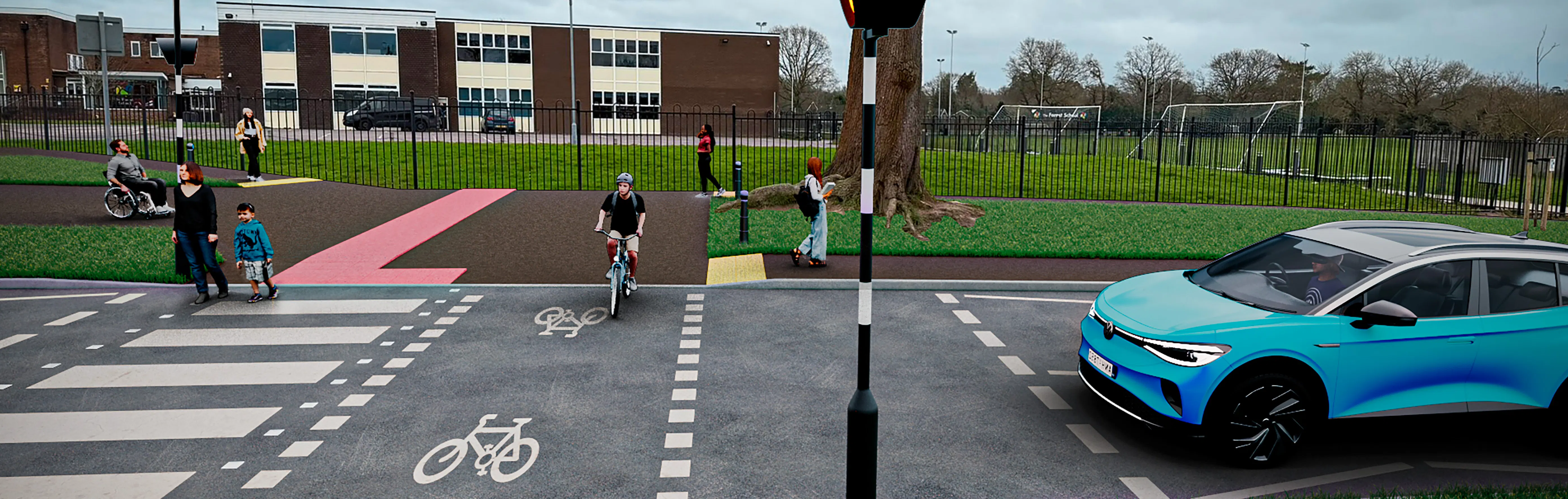
- New parallel crossings (a crossing for both pedestrians and cyclists) on Bennetts Road and Comptons Lane to improve pedestrian and cycle crossing safety.
- A new Zebra crossing on Comptons Lane, in proximity to Highlands Road.
- Improvements to the Comptons Lane service road (between numbers 9-43 Comptons Lane) junction to make movements clearer and safer for users.
- Improved segregated cycle tracks (separate footway and cycle track) linking to Forest School pupil only entrances.
- Two new school gates to support safer access and movement around the site.
- Pedestrian priority at Hornbeam Road, Highlands Road and MacLeod Road.
- Additional cycle parking to support sustainable travel to school.
- A 20mph limit between Bennetts Road and Highlands Road to create a safer, calmer driving environment.
- Pupils travelling to and from Forest School
- Parents, carers and guardians
- Pedestrians and cyclists using the surrounding road network
- Local residents accessing nearby roads and facilities
Why is the scheme required?
The scheme aims to improve safety and accessibility for people walking, wheeling or cycling along Comptons Lane and at the Comptons Lane / Bennetts Road junction, with a particular focus on the high number of pupils travelling to and from Forest School each day, and beyond to other local schools.
Currently, movement can be challenging for pedestrians and cyclists, especially at peak school times. The proposed improvements seek to reduce conflict between modes, create safer crossing points, and provide clearer routes to school entrances. This will help create a safer and more comfortable environment for pupils, parents, and other local users.
What is being proposed?
The scheme proposals are still at the detailed design stage and will be shaped by this consultation. At a high level, the scheme includes:
What type of crossing are proposed within this scheme?
We are proposing Zebra and Parallel crossings within the Comptons Lane Scheme, for a further explanation on types of crossings please click here (opens in new page)
Who is the scheme designed to benefit?
The scheme is primarily focused on improving safety and accessibility for:
By improving facilities for walking and cycling, the scheme also aims to reduce congestion and pressure on surrounding road network at peak times.
Will people still be able to travel by car?
Yes.
The scheme focuses on improving active travel facilities but does not prohibit vehicle access along Bennetts Road or Comptons Lane. There will be some alterations to the way in which all road users access the Comptons Lane service road (between numbers 9-43 Comptons Lane), but access will be maintained for all.
Are there any speed limit changes included?
The scheme proposes a 20mph speed limit between Bennetts Road and Highlands Road to create a safer, calmer driving environment. This will reduce the likelihood and severity of collisions, improve driver awareness around school‑related activity, and support smoother traffic movements during peak times.
What standards are the proposals being designed to?
As the design funding is administered by Active Travel England, all proposals must comply with:
Will parking be affected?
Some parking restrictions may be introduced to address antisocial parking, helping to protect access for residents and improve road safety. Any proposed changes will be clearly communicated and will be subject to further engagement and the appropriate statutory processes before implementation.
Will any land be required / is my property at risk?
The proposals are expected to be delivered primarily within the existing highway boundary. At this stage, there is no anticipated impact on private property. If any discussions with landowners are required as the design develops, these would take place at an early stage and with appropriate engagement.
Will trees or green space be affected?
The scheme will be planned to minimise impacts on trees and green spaces, so no removals are expected at this stage.
Opportunities to enhance planting or biodiversity will also be explored during this design stage.
How will disruption be managed during construction?
Should the scheme progress to construction, a detailed construction and traffic management plan will be developed. This will assess potential impacts on residents, school operations, road users and the local environment, with measures put in place to minimise disruption as far as possible.
How is the project funded?
Funding has been awarded by Active Travel England to develop the detailed design. This funding covers design, technical assessments, and consultation. Construction would be subject to future funding approvals.
What are the next steps?
We will carefully consider all comments received during the consultation. Feedback received will be used to inform the detailed design phase and the next steps for the proposal. We will document the process and publish the results in a consultation report.
Feedback from consultation will be used to shape the final proposals before any decision is made on progressing to construction.